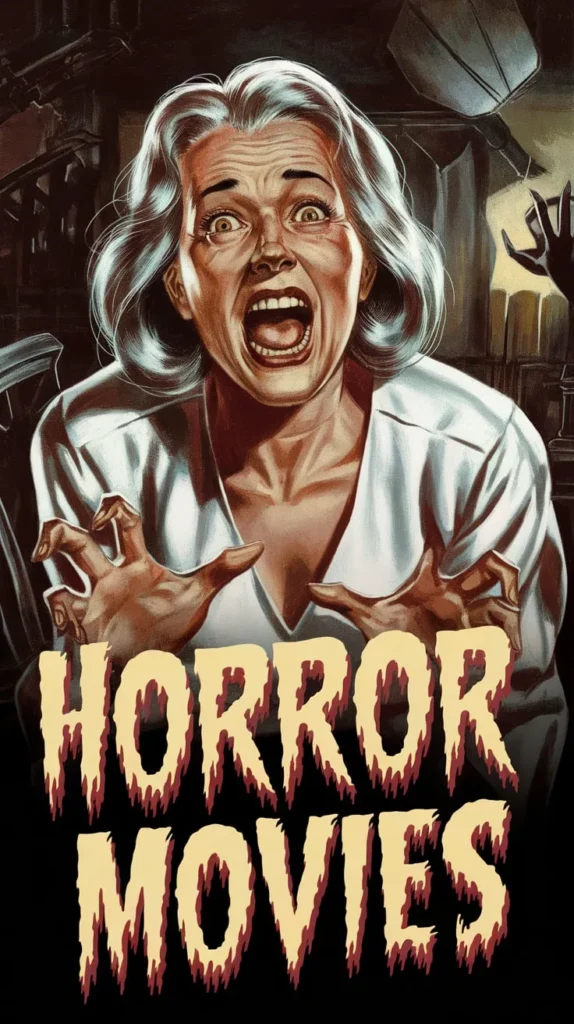
Horror Movies: The Complete Guide to Cinema’s Most Thrilling Genre
Horror movies have terrified, thrilled, disturbed, and fascinated audiences for well over a century. From the flickering shadows of silent-era monster films to the slow-burn psychological dread of modern elevated horror, the genre has never stopped evolving, and it has never once stopped being relevant. Whether you’re a lifelong member of the #HorrorFam who has seen everything or someone just dipping their toes into the dark water for the first time, this guide is your definitive companion to everything horror cinema has to offer.
We’re talking history, subgenres, filmmaking craft, iconic directors, legendary actors, global horror traditions, the psychology behind why we love being scared, and where the genre is headed next. This is the complete picture. Grab a snack, leave the lights on if you need to, and let’s get into it.
What Are Horror Movies?
Horror movies are films designed to provoke fear, dread, unease, or terror in the viewer. That sounds simple on the surface, but the mechanics behind achieving that effect, and the sheer variety of approaches filmmakers have taken over more than 125 years, make horror one of the most intellectually rich and technically demanding genres in all of cinema.
Unlike action films that rely on spectacle or comedies that depend on timing, horror operates on something more primal. It reaches into the nervous system. It taps into biological responses: the racing heartbeat, the shallow breathing, the sharp intake of breath before a scare lands. Horror movies work because fear is hardwired into us, and the genre has spent over a century learning exactly how to trigger it.
But horror is also, at its best, about much more than just scares. The greatest horror movies use the genre’s framework as a vehicle for social commentary, psychological exploration, cultural anxiety, and deeply human storytelling. Get Out is about systemic racism. Hereditary is about grief and inherited trauma. The Babadook is about grief that becomes so suppressed it turns monstrous. Jaws is about institutional dysfunction and the cost of denial. Horror movies hold up a mirror, and sometimes what stares back is far more unsettling than any monster.
This guide covers all of it.
Why We Love Horror Movies: The Psychology of Being Scared
Here is the central paradox of horror cinema: fear is a survival response designed to keep us away from danger, and yet the global horror movie market generates billions of dollars every year because people actively seek it out. Why?
The Neurobiology of a Horror Movie Scare
When you watch a horror movie, your brain does not fully distinguish between a fictional threat on screen and a real one. The amygdala, the brain’s threat-detection center, activates in response to scary imagery. Your sympathetic nervous system kicks in. Heart rate increases. Breathing becomes shallow. Cortisol and adrenaline flood your bloodstream.
The anterior cingulate cortex and the thalamus, which regulate emotional states and anxiety, become highly active during frightening scenes. The degree to which the amygdala fires actually correlates with how much enjoyment a viewer reports feeling during and after a horror film. The bigger the scare, the bigger the payoff.
Excitation Transfer: The Relief Theory
One of the most compelling explanations for horror enjoyment is excitation transfer. When a frightening sequence ends and the viewer realizes they are safe, the brain’s pleasure circuits activate to process the relief. The adrenaline that was pumping during the scary moment doesn’t instantly disappear; it lingers and gets reinterpreted as excitement and pleasure. The horror movie high is essentially a biological relief response with an adrenaline chaser.
This is why horror movies with effective tension-and-release cycles, films that make you genuinely anxious before paying off the scare, tend to be far more satisfying than ones that just throw shocking imagery at you without buildup.
The Protective Frame
Researchers have identified a “protective frame” that allows audiences to enjoy negative emotions during horror viewing. This frame has three components. First, the safety frame: viewers know the threat is fictional and cannot cause actual harm. Second, the detachment frame: conscious awareness that what you are watching is a film with actors, makeup, and sound design. Third, the control frame: the confidence that you can manage the emotions being triggered and exit the experience if you need to.
When the protective frame holds, horror viewing becomes genuinely pleasurable. When it cracks, such as when the content strikes too close to a personal trauma or feels unexpectedly real, the experience becomes uncomfortable in ways that go beyond entertainment.
Sensation Seeking and Catharsis
Psychological research consistently shows that individuals who score high on “sensation seeking” scales, meaning those who crave intense, novel stimulation, tend to be the most enthusiastic horror fans. The genre satisfies a genuine psychological appetite for intensity that everyday life often cannot provide.
Horror also serves a social and emotional function through catharsis. By watching characters navigate terror, grief, loss, and violence in a safe fictional context, viewers can process and “rehearse” strong emotions. The concept traces back to Aristotle’s Poetics, and it holds up: horror lets us confront what frightens us on our own terms, and often we walk away from the experience feeling stronger for it.
The Morbid Curiosity Factor
Horror movies also satisfy what researchers call morbid curiosity: the very human interest in dangerous, taboo, or disturbing aspects of existence. Death, violence, the supernatural, bodily transformation, the darkness of the human mind. These are things we instinctively want to understand and can safely explore through the lens of fiction. Horror movies are essentially controlled environments for examining the parts of reality we spend most of our lives trying not to think about.
The Complete History of Horror Movies: A Century of Fear
Horror cinema has a longer and richer history than most genres. It was there almost from the very beginning of moving pictures, and it has tracked the fears, anxieties, and obsessions of every era it has lived through. Here is the full story.
The Silent Era: Where It All Began (1896 to 1929)
The very first horror movie is widely considered to be Georges Méliès’ Le Manoir du Diable, released in 1896, just one year after the Lumière brothers introduced motion pictures to the world. Using early trick photography, Méliès conjured ghosts and demons on screen, drawing from Gothic literature and stage magic traditions that already had audiences primed for supernatural thrills.
Through the 1900s and 1910s, horror drew heavily from literary source material. Silent adaptations of Frankenstein, Dr. Jekyll and Mr. Hyde, and Edgar Allan Poe’s stories gave audiences familiar terrors rendered in a new and astonishing medium.
The 1920s gave horror cinema its first genuine artistic movement: German Expressionism. Films like Robert Wiene’s The Cabinet of Dr. Caligari (1920) and F.W. Murnau’s Nosferatu (1922) used distorted sets, oblique camera angles, and extreme chiaroscuro lighting to externalize psychological states of madness and dread. These weren’t just scary movies. They were visual representations of post-World War I trauma, of a society still reeling from mechanized slaughter on an industrial scale.
The aesthetic foundations established in this era, extreme shadow, disorienting geometry, the monster as a reflection of human psychology, would echo through horror cinema for the next hundred years.
The Golden Age: Universal Monsters and the Birth of the Horror Icon (1930s to 1940s)
The arrival of synchronized sound transformed horror. Suddenly the creak of a floorboard, the low moan of wind through a ruined castle, and the hiss of a vampire could accompany the images. The effect was electrifying.
Universal Pictures led the genre through what is now called its Golden Age. Starting with Dracula and Frankenstein in 1931, Universal built a stable of iconic monsters that became the foundation of horror cinema mythology. The Mummy (1932), The Invisible Man (1933), Bride of Frankenstein (1935), The Wolf Man (1941): these films created the archetypes that the genre is still working with today.
What made Universal Monster movies resonate beyond their scares was their emotional depth. Boris Karloff’s Frankenstein’s Monster was tragic and sympathetic, a creature that never asked to exist and was punished by society for the crime of being different. Bela Lugosi’s Dracula was sophisticated and seductive, an aristocratic predator from a dying world. These weren’t just villains. They were characters, and the best of them were reflections of Depression-era anxieties about isolation, scientific overreach, and being destroyed by forces beyond your control.
The 1940s saw a gradual pivot toward “terror films” with a more domestic and psychological focus. Films like Gaslight (1944) and Shadow of a Doubt (1943) relocated horror from Gothic European castles to American homes and small towns. The war years brought an awareness that real human atrocity exceeded what any monster could threaten, pushing horror to search for new forms.
The Atomic Age: Science, Paranoia, and Giant Monsters (1950s)
Post-war horror was profoundly shaped by two new fears: the atomic bomb and communist infiltration. The 1950s produced an extraordinary wave of science fiction horror built around radioactive mutations, alien invasions, and the terrifying consequences of scientific ambition unchecked by moral consideration.
Ishiro Honda’s Godzilla (1954) was not primarily a monster movie. It was a direct response to the nuclear bombings of Hiroshima and Nagasaki and the ongoing nuclear testing in the Pacific. The monster was radiation given physical form, a visualization of Japan’s very recent trauma. Western audiences who watched the film often missed this entirely, which is a fascinating dimension of horror’s capacity to carry cultural meaning across borders.
Don Siegel’s Invasion of the Body Snatchers (1956) gave McCarthy-era America its purest cinematic fever dream: a story about your neighbors, your family, and your community being silently replaced by something alien and emotionless. The reading as an allegory for communist infiltration is obvious, but it works equally well as a critique of American conformity and Cold War paranoia. Great horror, as always, operates on multiple levels at once.
This era also birthed the B-movie and the “creature feature,” which prioritized entertainment, spectacle, and drive-in accessibility over literary ambition. These films were often goofy and cheap, but they built a mass audience for horror that the genre had never had before.
Psychological Terror and Broken Taboos (1960s)
The 1960s marks one of the two or three most important turning points in horror history. Alfred Hitchcock’s Psycho, released in 1960, didn’t just redefine horror. It essentially invented modern horror as we understand it.
Psycho relocated fear from the supernatural to the mundane. The killer was not a monster from legend or a creature from a radioactive nightmare. He was the pleasant young man at the front desk of the roadside motel. Hitchcock shattered industry taboos with graphic violence (the shower scene remains one of cinema’s most studied sequences), a protagonist killed in the first act, and unflinching exploration of sexual obsession and psychological disorder. Every slasher film that came after owes a direct debt to Psycho.
George A. Romero’s Night of the Living Dead (1968) was the genre’s other seismic event of the decade. Romero took the zombie, at that point associated mostly with Haitian voodoo folklore and B-movie schlock, and reinvented it entirely as a cannibalistic reanimated corpse. More importantly, he used the zombie apocalypse as a framework for brutally honest social commentary on race relations, institutional failure, and the rot at the center of American self-image. The fact that the Black protagonist survives the monsters only to be killed by a white rescue posse was not subtle. It was not meant to be.
Social Upheaval and the Occult (1970s)
The 1970s produced some of the greatest horror movies ever made, and it is no coincidence that the decade was also defined by Vietnam, Watergate, urban decay, and a pervasive sense that American institutions had fundamentally failed. Horror movies were processing the same cultural anxiety that was driving everything from punk rock to New Hollywood cinema.
The supernatural found commercial and critical legitimacy with William Friedkin’s The Exorcist (1973), which became one of the highest-grossing films of all time and received ten Academy Award nominations. Its central fear, a child possessed by demonic evil and beyond the reach of parental love or modern medicine, cut directly to the anxieties of a generation watching traditional structures crumble.
Tobe Hooper’s The Texas Chain Saw Massacre (1974) arrived like a hammer blow, raw and documentary-rough, presenting violence not as spectacle but as a physical, suffocating reality. It was horror stripped of Gothic romance and delivered with genuine menace. John Carpenter’s Halloween (1978) crystallized everything that had been brewing in the decade and essentially codified the slasher movie as a genre unto itself: the masked, seemingly unkillable killer, the small-town suburban setting, the Final Girl, the stalking camera that positions the audience behind the killer’s eyes.
Steven Spielberg’s Jaws (1975) demonstrated that horror could be blockbuster cinema, not just drive-in fare. It also introduced a fear, the invisible predator lurking beneath calm water, that has lodged permanently in the collective unconscious.
The 1970s was also when international horror, particularly Italian giallo and supernatural horror from directors like Dario Argento and Lucio Fulci, began to exert serious influence on the genre globally.
Slashers, Franchises, and the Practical Effects Zenith (1980s)
The 1980s were horror’s pop culture moment. Slasher franchises dominated the decade: Friday the 13th launched in 1980 and would eventually produce twelve installments. A Nightmare on Elm Street (1984) introduced Freddy Krueger, one of the most inventive horror villains ever conceived. Child’s Play (1988) gave horror its most unexpectedly durable franchise killer in a Good Guy doll named Chucky.
The rise of home video was transformative. Horror moved into living rooms, became something families and friend groups could experience together, and built a massive, loyal community of fans who rewatched their favorites obsessively and debated the finer points of kill sequences and mythology. The #HorrorFam, before the internet gave it a name, was being built in living rooms across America throughout the 1980s.
This decade was also the zenith of practical special effects. Artists like Rob Bottin, Stan Winston, Tom Savini, and Rick Baker created monsters and gore effects of extraordinary craft and physical authenticity. John Carpenter’s The Thing (1982) remains the gold standard of practical creature effects, a film in which the horror is entirely dependent on the visceral, physical reality of what is in frame. An American Werewolf in London (1981) gave cinema its greatest werewolf transformation sequence. These effects still hold up today in ways that many CGI-heavy films of the following decades do not.
Meta Horror, Psychological Complexity, and Found Footage (1990s)
After a decade of slasher saturation, the 1990s brought a different kind of intelligence to horror. The genre became reflective, even self-critical.
Jonathan Demme’s The Silence of the Lambs (1991) won five Academy Awards including Best Picture, an almost unprecedented achievement for a horror film (or any thriller), and demonstrated conclusively that the genre could achieve the highest levels of cinematic craft. Se7en (1995) followed with a vision of evil so bleak and precisely constructed that it redefined what a psychological horror thriller could be.
Wes Craven’s Scream (1996) is arguably the most meta film ever made. It is a horror movie in which the characters have seen all the same horror movies the audience has, argue about the rules those films established, and then both follow and subvert those rules simultaneously. Scream revitalized a genre that had been running on fumes and launched an entire wave of self-aware horror that grappled with what it meant to be a horror movie in an era when everyone already knew how horror movies worked.
The decade closed with The Blair Witch Project (1999), which used a micro-budget, amateur-aesthetic found footage approach to create an entirely new kind of horror: horror rooted in the feeling that what you were watching was real. Made for roughly $60,000 and marketed with a campaign that blurred the line between fiction and reality, Blair Witch grossed nearly $250 million worldwide and permanently added found footage to the genre’s toolkit.
Elevated Horror, Social Horror, and the Modern Renaissance (2000s to Present)
The 21st century has seen horror fragment into more distinct movements than any previous era, and the overall quality ceiling of the genre has risen dramatically.
The early 2000s brought the “torture porn” wave, led by the Saw franchise (2004 onward) and Eli Roth’s Hostel (2005). These were deliberately extreme films that pushed the limits of graphic violence and used pain and bodily destruction as their primary horror mechanics. They were polarizing within the genre community and broadly condemned outside it, but they also represented a genuine subgenre with its own internal logic and fan base.
The mid-2000s saw a wave of J-Horror remakes (The Ring, The Grudge) bring a distinctly Asian ghost story sensibility to mainstream American audiences. This period also featured a surge in supernatural haunting films that built toward the enormous commercial success of The Conjuring universe, which launched in 2013 and became one of the highest-grossing horror franchises in history.
The most significant development of the modern era, however, has been what critics and fans call “elevated horror” or “post-horror”: films that use genre mechanics to explore serious psychological, social, and philosophical territory with the craft and ambition of prestige drama.
Jordan Peele’s Get Out (2017) is the definitive example. A horror film about a Black man visiting his white girlfriend’s family, it operates simultaneously as a Rosemary’s Baby-style paranoia thriller and as one of the most precise cinematic explorations of American racism ever put on screen. It was nominated for four Academy Awards and won Best Original Screenplay, making Peele the first Black screenwriter to win that award.
Ari Aster’s Hereditary (2018) and Midsommar (2019) brought a new level of psychological intensity and formal rigor to supernatural and folk horror respectively. Robert Eggers’ The Witch (2015) and The Lighthouse (2019) demonstrated that horror could be made with the visual grammar of Bergman and Kubrick. Mike Flanagan became the preeminent horror auteur of streaming television through The Haunting of Hill House, Midnight Mass, and The Fall of the House of Usher.
A24 and Blumhouse became the defining studios of modern horror, and a new generation of horror fans grew up taking for granted that the genre could achieve the highest levels of artistry.
The Complete Horror Movie Subgenre Guide
One of the great strengths of horror is its extraordinary range. “Horror movies” is not one thing. It is a massive umbrella covering dozens of distinct subgenres, each with its own conventions, fan communities, and defining texts. Here is the most comprehensive breakdown of every major horror subgenre you need to know.
Supernatural Horror
Demonic Possession Horror Films in this subgenre center on malevolent entities, typically demonic or otherwise spiritually evil, taking control of a human host. The conflict is usually between the possessed individual’s surviving humanity and the invading force, and between the powerlessness of human relationships and institutions (medicine, psychology, religion) in the face of genuine evil. The Exorcist (1973) is the foundational text. Modern entries include The Conjuring 2 (2016), Deliver Us from Evil (2014), and Insidious (2010). Hereditary (2018) belongs here in part, though its pagan cult mythology makes it equally at home under folk horror.
Ghost and Haunting Horror Ghost stories are perhaps the most universally recognized horror subgenre across cultures. They center on the spirits of the dead, restless, vengeful, or trapped, interfering with the living. The best haunting films use the ghost as a metaphor: for unprocessed grief, for family secrets, for the weight of the past. The Haunting (1963), Poltergeist (1982), The Others (2001), The Conjuring (2013), Insidious (2010), and the broader Conjuring universe all fall here.
Paranormal and Poltergeist Horror A subset of ghost horror focused on physical manifestations of supernatural energy, objects moving, sounds without sources, physical attacks by invisible forces. Poltergeist (1982) is the defining text. The Haunting of Hill House television series brought extraordinary psychological depth to this territory.
Witchcraft and Occult Horror Covering everything from historical witch trials to modern Satanic ritual, this subgenre explores ancient dark power and those who pursue or are victimized by it. Rosemary’s Baby (1968) and Suspiria (1977) are the classics. The VVitch (2015) brought uncompromising historical rigor to the territory. The Craft (1996) gave it a teen movie sensibility that resonated for a generation.
Cursed Object Horror A specific type of supernatural horror built around an object, a videotape, a mirror, a music box, a painting, that carries a supernatural curse. The Ring (2002) is the most commercially successful modern example. Annabelle and its sequels have built an entire franchise around this concept.
Religious Horror Horror that draws specifically from religious iconography, mythology, and the conflict between faith and evil. The Exorcist is the foundational text, but this subgenre also includes The Omen (1976), Rosemary’s Baby (1968), and more recent entries like The Devil’s Doorway (2018) and Prey for the Devil (2022). Religious horror tends to be most effective when it takes the theology seriously rather than using it as window dressing.
Monster and Creature Horror
Classic Monster Horror The Universal Monsters era defined the archetypes: the vampire, the werewolf, the mummy, the creature from the lagoon, the invisible man. These films established character types and narrative structures that still underpin the genre. Dracula (1931), Frankenstein (1931), The Wolf Man (1941), and their sequels remain essential viewing for any serious horror fan.
Vampire Horror One of horror’s richest subgenres, vampire films range from the aristocratic Gothic romance of Nosferatu and Dracula to the brutal predatory horror of 30 Days of Night (2007), the tragic immortal drama of Interview with the Vampire (1994), and the coming-of-age melancholy of Let the Right One In (2008). Vampire cinema is capacious enough to contain all of these.
Werewolf Horror Werewolf films are fundamentally about transformation, about the animal nature beneath the human exterior. The transformation sequences of An American Werewolf in London (1981) remain the standard by which all subsequent werewolf effects are judged. Dog Soldiers (2002) is a modern cult favorite. Ginger Snaps (2000) used the werewolf transformation as an extended metaphor for female adolescence with remarkable effectiveness.
Zombie Horror George A. Romero invented the modern zombie in Night of the Living Dead (1968) and used the subsequent sequels, Dawn of the Dead (1978) and Day of the Dead (1985), to expand his social commentary. The subgenre exploded in the 2000s with 28 Days Later (2002), the Dawn of the Dead remake (2004), and the long-running television series The Walking Dead. Train to Busan (2016) is widely considered the finest zombie film of the modern era.
Creature Feature and Natural Horror When animals or nature itself becomes the antagonist, you are in creature feature territory. This covers leviathan-scale threats (Jaws, Cloverfield, The Host) and swarming horrors (Arachnophobia, Them!, The Swarm). Contemporary entries include Crawl (2019) and Nope (2022). The best creature features use their monsters to externalize environmental anxiety, fears about nature reclaiming what humanity has destroyed.
Kaiju Horror Giant monster movies that position creature threat at a civilizational scale. Godzilla (1954) is the origin point and the gold standard, a film rooted in genuine nuclear trauma rather than popcorn spectacle. The Gamera series, Cloverfield (2008), and Colossal (2016) are notable entries across the decades. The modern MonsterVerse films lean further into action-adventure territory than horror, but the kaiju concept itself remains a horror genre invention.
Alien Horror Extraterrestrial horror covers everything from the slow, relentless dread of Ridley Scott’s Alien (1979), to the paranoid shapeshifter terror of The Thing (1982), to the invasion narratives of Signs (2002) and A Quiet Place (2018). The subgenre often functions as a vehicle for fears about contamination, invasion, and the hostility of an indifferent universe.
Mermaid and Aquatic Creature Horror A smaller but fascinating subgenre. The Shape of Water (2017) gave it prestige legitimacy, though Guillermo del Toro’s film is as much romance as horror. Deep Blue Sea (1999), Dagon (2001), and Underwater (2020) cover the terror of what lives in deep water.
Insect and Swarm Horror A specific creature feature variant that taps into the deeply wired human disgust response to swarming, crawling things. Them! (1954) pioneered the form with radioactive giant ants. Arachnophobia (1990) brought it to mainstream family audiences. Eight Legged Freaks (2002) played the concept for gleeful B-movie spectacle. The Fly (1986) blends insect horror with body horror to devastating effect. Infested (2023, also known as Vermines) is an outstanding recent French entry that uses spiders with real craft and menace.
Shark and Aquatic Predator Horror Jaws (1975) essentially invented the modern summer blockbuster while also creating one of cinema’s most durable sub-subgenres. The fear of a large predator lurking in water we cannot see through is primal and ancient. 47 Meters Down (2017), The Shallows (2016), and Open Water (2003) are strong modern entries. No Shark Week documentary, however, has matched the dread of that two-note John Williams theme.
Slasher and Human Threat Horror
Slasher Films The defining subgenre of horror’s pop culture era. A masked, seemingly unkillable killer stalks and murders a group of victims, typically teenagers, until a Final Girl (or occasionally Final Boy) survives by outwitting them. The rules were codified by Halloween (1978), expanded by Friday the 13th (1980), elevated by A Nightmare on Elm Street (1984), and satirized by Scream (1996). The subgenre has proven remarkably durable: the Halloween franchise alone has produced thirteen films.
Giallo An Italian subgenre that combines elements of mystery, psychological thriller, and slasher horror with exceptionally stylized visual aesthetics and pulsating musical scores. The name comes from the yellow (giallo) covers of Italian pulp crime novels. Dario Argento is the genre’s defining filmmaker: The Bird with the Crystal Plumage (1970), Deep Red (1975), and Suspiria (1977) are his masterworks. Mario Bava’s Blood and Black Lace (1964) essentially invented the form.
Psychological Horror / Psychological Thriller Horror that operates on the mind rather than the body. The threat is frequently ambiguous: is the danger real, or is the protagonist losing their grip on reality? Stanley Kubrick’s The Shining (1980) is the supreme example: a film that can be read simultaneously as a supernatural haunting and a portrait of a man’s mental disintegration. Others include Jacob’s Ladder (1990), Black Swan (2010), and Repulsion (1965).
Home Invasion Horror The domestic sanctuary becomes a place of claustrophobic terror when violent intruders arrive. The subgenre is effective because it weaponizes the place we are supposed to feel safest. Michael Haneke’s Funny Games (1997, remade 2007) is the most formally rigorous entry, a film that punishes the viewer for their voyeuristic investment in screen violence. The Strangers (2008), You’re Next (2011), and Don’t Breathe (2016) are modern highlights.
Stalker Horror A specific variant of human-threat horror focused on persistent, obsessive pursuit rather than random or ideological violence. It Follows (2014) translated the stalker horror concept into an STD metaphor of haunting elegance.
Gore and Splatter Horror A subgenre that foregrounds graphic violence and physical destruction as its primary appeal. The Saw franchise, Terrifier (2016) and its sequel Terrifier 2 (2022), the Hellraiser series, and the Evil Dead films (to varying degrees) all occupy this territory. The best splatter films use excess as a kind of dark comedy; the worst are simply exercises in unpleasantness.
Survival Horror Films in which characters must survive an extreme and sustained threat through ingenuity, physical endurance, and psychological resilience. The Descent (2005), 47 Meters Down (2017), Crawl (2019), and Prey (2022) are strong modern examples. Survival horror frequently strips away all the trappings of civilization and asks what people are willing to do to live.
Body Horror
Classic Body Horror Perhaps the most viscerally uncomfortable subgenre, body horror focuses on the grotesque transformation, mutilation, invasion, or loss of control of the human body. David Cronenberg is its unquestioned master: Videodrome (1983), The Fly (1986), Naked Lunch (1991), eXistenZ (1999). These films explore the body as contested territory, as a site of horror because we can never fully trust or control the meat we live in.
Medical and Disease Horror Closely related to body horror but focused specifically on illness, infection, and medical procedures as sources of terror. Contracted (2013), Thanatomorphose (2012), and The Sadness (2021) occupy the extreme end. Contagion (2011) is a more grounded entry that became unexpectedly relevant during the COVID-19 pandemic.
Parasite Horror Films in which an organism invades and takes control of a host body. Shivers (1975), Slither (2006), and The Faculty (1998) are notable entries. The South Korean film Parasite (2019) uses the concept metaphorically to devastating effect, though it functions more as dark drama than genre horror.
Pregnancy and Reproductive Horror A subgenre exploring fear around pregnancy, childbirth, and reproductive autonomy. Rosemary’s Baby (1968) is the classic; Prevenge (2016), Titane (2021), and The Substance (2024) are modern entries that bring explicitly feminist perspectives to the material.
Atmospheric and Slow-Burn Horror
Folk Horror Folk horror has experienced a massive resurgence in the past decade, but the subgenre has deep roots. It is defined by isolation, rural or preindustrial settings, pagan or traditional belief systems in conflict with modern values, and a pervasive sense of community as threat. The Wicker Man (1973) is the foundational text. Film historian Adam Scovell’s critical grouping of The Blood on Satan’s Claw (1971) and Witchfinder General (1968) alongside The Wicker Man as an informal “folk horror trilogy” has become a touchstone of genre scholarship, though the films were made independently with no connection to each other. Midsommar (2019) is the defining modern entry. Other highlights include The Ritual (2017), Saint Maud (2019), and The Wailing (2016).
Gothic Horror Gothic horror carries the aesthetic inheritance of 19th-century Gothic literature: crumbling manor houses, romantic melancholy, family curses, and the sense that the past has an iron grip on the present. Roger Corman’s Edgar Allan Poe adaptations are the B-movie classics. Crimson Peak (2015) is Guillermo del Toro’s gorgeous modern take. Rebecca (1940), The Woman in Black (2012), and Suspiria (1977) all have strong Gothic elements.
Cosmic and Lovecraftian Horror Inspired by the work of H.P. Lovecraft, cosmic horror deals with the fundamental insignificance of humanity in a universe populated by entities so vast and alien that direct contact with them causes madness. It is horror without hope of survival or resistance; the best response to cosmic horror is simply not to attract attention. The Mist (2007), Annihilation (2018), The Void (2016), and Color Out of Space (2019) are strong film entries. True Detective Season 1 brought Lovecraftian themes to prestige television.
Southern Gothic Horror A specifically American subgenre rooted in the decayed grandeur, racial history, and fundamentalist religion of the American South. True Blood, Angel Heart (1987), and True Detective blend this aesthetic with more conventional horror elements.
Atmospheric / Arthouse Horror Films that prioritize mood, visual poetry, and psychological suggestion over conventional scares. Robert Eggers and Ari Aster are the defining contemporary practitioners. Carl Theodor Dreyer’s Vampyr (1932) and Luis Buñuel’s surrealist work are the ancestors. These films frequently resist easy categorization and often divide audiences between those who find them profound and those who find them pretentious.
Social Horror
Elevated Horror / Post-Horror The most debated label in contemporary horror criticism, “elevated horror” refers to films that use genre mechanics in service of serious thematic exploration, typically drawing from prestige drama in terms of pacing, character development, and ambition. Get Out, Hereditary, The Witch, It Follows, The Babadook (2014), Midsommar, and Men (2022) are all cited as examples. Critics of the label argue that it implies other horror is lesser, which is a fair objection, but the films grouped under the term represent a genuine and important movement.
Social Commentary Horror Horror has always been used for social commentary, but this is a specific category of films where the social critique is explicitly central to the text. Get Out dissects racism. Us (2019) interrogates class and American self-mythology. His House (2020) explores the refugee experience with quiet devastation. Candyman (1992) confronts gentrification and urban abandonment. These films prove that horror is one of the most effective vehicles in cinema for speaking truth about systems of power.
Eco-Horror Films that frame environmental destruction and humanity’s relationship with nature as the source of horror. The Birds (1963) and Long Weekend (1978) are early entries where nature turns actively hostile. The Happening (2008) divides audiences but its premise, plants releasing neurotoxins to cull humanity, is genuinely eco-horror. More recently, Antlers (2021) and The Ritual (2017) work environmental themes into their creature mythology. As the climate crisis intensifies, eco-horror has become an increasingly fertile subgenre.
Meta and Experimental Horror
Found Footage Horror The Blair Witch Project (1999) is the modern origin point, though Cannibal Holocaust (1980) got there first and in far more disturbing fashion. The subgenre presents the film as discovered documentary footage, using rough amateur aesthetics to create a sense of immediacy and realism. Paranormal Activity (2007) brought found footage back to mainstream audiences and did so with extraordinary commercial efficiency. REC (2007), Cloverfield (2008), and The Visit (2015) are other strong entries.
Mockumentary Horror Related to found footage but with a more polished, traditional documentary aesthetic. Man Bites Dog (1992) is a pitch-black Belgian satire following a documentary crew filming a serial killer. Lake Mungo (2008) is a quietly devastating Australian entry about a family grieving after their daughter’s drowning. Noroi: The Curse (2005) is a Japanese masterpiece of the form, unfolding as a paranormal researcher’s final documentary investigation. This is a smaller subgenre than found footage but contains some genuinely exceptional work.
Screenlife Horror A contemporary format in which the entire film is told through computer screens, smartphones, and social media interfaces. Unfriended (2014) pioneered the format. Host (2020), made during the COVID lockdowns using Zoom, is the most inventive entry. This subgenre is explicitly about modern technophobia and digital anxiety.
Meta Horror Horror that is explicitly aware of and in dialogue with horror as a genre. Scream is the defining text. Cabin in the Woods (2012) is the most formally ambitious deconstruction of slasher conventions ever attempted. New Nightmare (1994) and Wes Craven’s film-within-a-film conceit anticipated the meta movement by two years before Scream arrived.
Comedy Horror The blend of genuine scares and comedy is incredibly difficult to execute and very easy to get wrong. When it works, it produces some of the most beloved films in the genre. Evil Dead 2 (1987) and Army of Darkness (1992) are slapstick horror masterpieces. An American Werewolf in London is arguably the finest true horror-comedy ever made. Shaun of the Dead (2004) and What We Do in the Shadows (2014) are modern classics. Jennifer’s Body (2009) has been extensively reappraised as a sharp feminist comedy horror that its original marketing completely failed to understand.
Anthology Horror Horror films structured as collections of short stories, often connected by a framing device. Creepshow (1982), written by Stephen King and directed by George A. Romero, is the gold standard. Trick ‘r Treat (2007) is the most beloved modern anthology. The V/H/S series has brought the format to found footage. Black Mirror, while a television series, operates in anthology horror territory.
Extreme and Transgressive Horror A category encompassing films that deliberately push beyond the limits of what mainstream audiences will tolerate, often combining extreme violence with serious artistic or philosophical intent. The New French Extremity movement produced Martyrs (2008), Frontier(s) (2007), and Inside (2007), films of genuine extremity and genuine craft. Irreversible (2002) by Gaspar Noé is perhaps the most formally rigorous extreme horror film ever made.
Hagsploitation / Grande Dame Guignol A recognized 1960s subgenre built around aging Hollywood actresses performing in Grand Guignol psychological scenarios. Robert Aldrich’s What Ever Happened to Baby Jane? (1962) launched it, with Bette Davis and Joan Crawford delivering performances of baroque, riveting excess. Strait-Jacket (1964), Hush… Hush, Sweet Charlotte (1964), and The Nanny (1965) followed. The subgenre has been reappraised in recent years through Ryan Murphy’s Feud: Bette and Joan, which dramatized the making of Baby Jane as its own horror story.
Revenge Horror / Rape-Revenge One of horror’s most morally contested and critically discussed subgenres, the rape-revenge film centers on a female protagonist who survives violent assault and enacts retribution on her attackers. I Spit on Your Grave (1978) established and remains the defining text, a film that is simultaneously exploitative and genuinely disturbing in its portrayal of both violence and justice. Ms. 45 (1981) brought more formal artistry to the formula. More recent entries including Revenge (2017), directed by Coralie Fargeat, and Promising Young Woman (2020) have brought explicitly feminist critical frameworks to the subgenre, reorienting the audience’s moral position entirely.
Siege Horror A structural subgenre defined by a location being surrounded and characters trapped within it, creating claustrophobic, inescapable threat. Night of the Living Dead is the foundational text, its farmhouse siege under zombie attack establishing the model. The Mist (2007), The Sadness (2021), and Don’t Breathe (2016) all rely on siege dynamics. The format often overlaps with zombie horror and home invasion but has its own distinct tension architecture rooted in containment and dwindling resources.
Tech Horror / Techno-Horror Horror rooted in technology as threat, from the body-technology fusion of Cronenberg’s Videodrome (1983) to the network-as-supernatural-conduit of Pulse/Kairo (2001) to the social media horror of Unfriended (2014) and the AI anxiety of M3GAN (2022). As our relationship with technology becomes increasingly intimate and inescapable, this subgenre has expanded rapidly. It intersects with screenlife horror and with broader science fiction horror but has its own distinct concern: not just that technology can be used to harm us, but that the technology itself may become the threat.
The Craft of Horror Filmmaking
Understanding how horror movies work on a technical level enhances your appreciation of the genre enormously. The best horror films are masterclasses in the deliberate manipulation of attention, emotion, and biological response.
Cinematography: Seeing in the Dark
Lighting is the primary tool of atmospheric horror. Low-key lighting, in which shadow dominates the frame and details are deliberately concealed, creates mystery and unease by forcing the viewer’s imagination to fill in the darkness.
Chiaroscuro, the stark contrast between illuminated areas and deep shadow, is horror’s oldest visual technique, inherited directly from German Expressionism. Modern films use it with equal sophistication: think of the precise pools of light in Hereditary, the way darkness presses in from the edges of every frame.
Camera movement carries enormous psychological weight. Handheld cameras create instability and immediacy, putting the viewer physically in the space with the characters. Static cameras can be equally unsettling when they hold a shot longer than comfortable, building tension through sheer refusal to look away or cut. The Overlook Hotel’s corridors are most frightening when the camera just… keeps following Danny Torrance without cutting, inexorable and patient.
Dutch angles (tilted camera frames) suggest psychological distortion and disorientation. Point-of-view shots create either the victim’s helpless perspective or the killer’s predatory one, with very different but equally effective terror in each case.
Tension Architecture: The Art of the Buildup
The most sophisticated horror filmmakers understand that a scare is only as effective as the tension that precedes it. Building dread is a craft entirely distinct from delivering the payoff, and most failed horror films are failures of tension architecture rather than failures of the scare itself.
Effective tension relies on three elements working in concert: information asymmetry (the audience knows something the character doesn’t, or vice versa), time pressure (a ticking clock, literal or implied), and stakes establishment (we need to care about the character before we fear for them).
Alfred Hitchcock famously used the analogy of a bomb under a table. If two characters are talking and a bomb simply explodes, you get fifteen seconds of shock. But if the audience can see the bomb ticking while the characters chat about nothing, you get fifteen minutes of unbearable tension from the same scene. Horror operates on this principle constantly. The question is not what the scare is, but how long and how effectively the filmmaker can make the audience dread its arrival.
Color as a Horror Tool
Color grading and deliberate color palettes are underappreciated tools in the horror filmmaker’s kit. Dario Argento’s Suspiria uses supersaturated primary colors, deep reds and brilliant blues, to create a dream-logic unreality in which the physical world itself feels unstable and threatening. The Witch deploys desaturated, flat gray-green tones that make the New England wilderness look genuinely hostile. Hereditary uses warm domestic lighting that is slowly replaced by colder, more clinical tones as the family’s world disintegrates.
Color communicates danger and safety subliminally. Horror films frequently use warm, golden practical light to signal momentary safety and cold, blue-tinted light to signal threat. The most sophisticated horror films invert these expectations to create unease even during seemingly safe moments.
The Music of Horror: Scores That Define Dread
Horror cinema has produced some of the most instantly recognizable music in film history, and several composers have become as synonymous with the genre as the directors and stars.
John Carpenter’s Halloween theme is the most famous example of a horror director composing his own score, a simple 5/4 time signature melody that established the sound of suburban dread for an entire generation. Carpenter has scored most of his own films, and the sonic consistency across Halloween, The Fog, The Thing, and Christine is a major component of his auteur identity.
Bernard Herrmann’s Psycho score, with its frenzied, all-strings shrieking in the shower scene, is one of the defining pieces of 20th-century film music. Herrmann understood that psychological horror needed psychological music, and his work across his Hitchcock collaborations demonstrates a mastery of musical unease that has never been surpassed.
The Italian band Goblin created scores for Dario Argento’s Deep Red and Suspiria that fused progressive rock, jazz, and electronic experimentation into something genuinely unique. The Suspiria score is less a traditional film score than an audio assault that creates its own dimension of horror independent of the images.
Modern horror scoring has been shaped significantly by Disasterpeace (It Follows), Colin Stetson (Hereditary), Mark Korven (The Witch), and Bobby Krlic (Midsommar). These composers have pushed horror scoring toward more experimental, atonal territory: music that sounds wrong in ways the conscious mind cannot immediately identify, which is precisely the effect the films need.
Sound Design: The Architecture of Fear
Professional horror sound designers often say that sound is more important than visuals in creating fear, and the neuroscience supports this. Auditory stimuli trigger the startle response faster and more reliably than visual ones.
The “Lewton Bus,” named for classic horror producer Val Lewton, is the foundational horror sound technique: a long, quiet build followed by a sudden loud noise that turns out to be harmless (a cat leaping, a door slamming in the wind), providing momentary relief that makes the subsequent real scare far more impactful because the audience has just relaxed.
Non-diegetic score, music that exists outside the film’s world, is essential to sustained horror tension. John Carpenter composed his own Halloween score, a deceptively simple 5/4 time signature melody that has become one of the most recognizable pieces of film music ever written. The band Goblin’s scores for Dario Argento’s films created a propulsive, prog-rock anxiety that was entirely unlike anything else in cinema at the time.
Infrasound, frequencies below the threshold of human hearing, has been used experimentally in horror sound design with genuinely measurable physiological effects on audiences. Certain low frequencies can induce feelings of unease, dread, and a sense of presence. Several horror films have incorporated this technique, though exactly which ones is a matter of ongoing discussion.
Silence itself is a horror tool. The sudden absence of score or ambient sound creates hyperawareness and signals the audience to pay extreme attention to the environment, making the eventual interruption far more powerful.
Special Effects: Practical vs. Digital
The debate between practical and digital effects is one of horror fandom’s most enduring conversations, and for good reason: the choice between physical and computer-generated horror has profound implications for how terrifying a film is likely to be.
Practical effects have physical weight, texture, and dimension. Actors can interact with them organically, producing performances grounded in genuine physical reaction rather than reacting to empty air or reference objects. They do not age in the way CGI does: The Thing’s creature sequences from 1982 are significantly more convincing today than many CGI creatures from twenty years later.
The 1980s were the golden age of practical effects mastery. Rob Bottin’s work on The Thing, Rick Baker’s on An American Werewolf in London, Tom Savini’s gore effects across dozens of films, and Stan Winston’s creature work represented a high watermark of physical artistry that is unlikely to be surpassed.
CGI opened up possibilities unavailable to practical effects: unlimited scale, environments that could not be physically built, creatures that could move in ways that no physical puppet could. The early digital era of the late 1990s and 2000s produced some genuine horrors of a different kind, specifically, very unconvincing CGI monsters that look worse with every passing year.
Modern horror has arrived at a “practical first” philosophy that represents the best of both approaches: build as much as possible in camera, use digital tools to extend or enhance the physical creation rather than replace it. Nope (2022), Hereditary, and The Black Phone (2021) all exemplify this approach.
Legendary Horror Movie Directors
Horror has produced some of cinema’s most distinctive auteurs, filmmakers whose visions are so specific and personal that their films are immediately identifiable as theirs.
Alfred Hitchcock (1899 to 1980) may not have directed exclusively horror, but his influence on the genre exceeds anyone else’s. The technical innovations of Psycho, including the killer POV shot, the shower sequence’s editing pattern, and the audacious decision to kill the apparent protagonist in the first act, provided the foundation for everything that followed in thriller and horror cinema.
Wes Craven (1939 to 2015) reinvented horror three distinct times across his career. The Last House on the Left (1972) brought raw exploitation horror. A Nightmare on Elm Street (1984) created one of the most inventive horror villains ever conceived, a killer who could attack in dreams. Scream (1996) deconstructed the entire genre while simultaneously being an excellent example of it. No other filmmaker did so much work to define and redefine horror’s possibilities.
John Carpenter brought a precise, economical visual style to horror that has proven enormously influential. Halloween, The Thing, The Fog (1980), Christine (1983), and Prince of Darkness (1987) represent a remarkable run of genre filmmaking. Carpenter also composed his own scores, giving his films a unique sonic identity.
George A. Romero (1940 to 2017) used zombies as a consistent vehicle for social satire and commentary across more than four decades. Night of the Living Dead, Dawn of the Dead, and Day of the Dead (1985) form one of horror cinema’s great trilogies. Romero never stopped being angry about what he saw in American society, and his films never let the audience forget it.
Dario Argento is the master of Italian horror, a filmmaker who treated genre cinema as an opportunity for operatic visual excess and psychological violation. Suspiria’s color palette and sound design alone changed what horror movies were allowed to look and sound like.
David Cronenberg created an entire philosophical universe of body horror that no other filmmaker has inhabited with anything like the same rigor. From Shivers to Videodrome to The Fly to Naked Lunch to Crash to eXistenZ, Cronenberg’s career is one of the most coherent and challenging bodies of work in genre cinema.
Tobe Hooper (1943 to 2017) proved with The Texas Chain Saw Massacre that horror could be made with documentary rawness and still be formally brilliant. Poltergeist and Salem’s Lot extended his range considerably.
James Wan has been the dominant commercial force in mainstream horror since the mid-2000s, and the scale of what he built is easy to underestimate. Saw (2004) launched an entire era of extreme horror. Insidious (2010) and its sequels revitalized the supernatural haunting film for mainstream audiences. The Conjuring (2013) became one of the highest-grossing horror films ever made and spawned the most expansive horror cinematic universe in history, encompassing The Conjuring sequels, Annabelle, The Nun, and beyond. No other filmmaker working today has launched as many successful horror franchises.
Jordan Peele has become the most important horror filmmaker of his generation with just Get Out and Us (plus his production work on Candyman and his Monkeypaw Productions slate). His ability to embed precise social commentary in formally accomplished genre films puts him in the company of Romero.
Ari Aster and Robert Eggers represent the elevated horror movement at its most ambitious. Hereditary, Midsommar, The Witch, and The Lighthouse are among the most formally accomplished horror films ever made.
Sam Raimi built one of horror’s most beloved filmographies with the Evil Dead trilogy (1981, 1987, 1992), which moved from raw low-budget terror in the original through the slapstick horror masterpiece of Evil Dead 2 to the full genre-comedy of Army of Darkness. Raimi’s kinetic, physically inventive camera style, all dutch angles and crash zooms and objects flying at the lens, influenced a generation of horror filmmakers and established Bruce Campbell as one of the genre’s most beloved icons.
Jennifer Kent made one of the most important horror debuts of the modern era with The Babadook (2014), a film about a widow’s grief and the way refusing to confront it allows it to become something monstrous. Kent brought a literary precision and emotional intelligence to the material that elevated it beyond genre craft into something genuinely affecting.
Ti West has become one of the most discussed horror directors of the current moment through the X/Pearl/MaXXXine trilogy, a formal and thematic exploration of ambition, performance, and violence that demonstrates remarkable range across three tonally distinct films.
Mike Flanagan has built the most impressive body of work in modern horror television, with The Haunting of Hill House, The Haunting of Bly Manor, Midnight Mass, The Midnight Club, and The Fall of the House of Usher all demonstrating extraordinary craft and emotional intelligence.
Iconic Horror Actors: The Faces of Fear
Horror has produced a constellation of performers whose faces, voices, and physical presences have become inseparable from the genre’s identity.
Bela Lugosi established the seductive, aristocratic vampire archetype in Dracula (1931) with such precision that every screen vampire since owes him a debt. The cloak, the accent, the hypnotic gaze: Lugosi invented these as conventions.
Boris Karloff gave Frankenstein’s Monster tragic humanity and sympathetic weight that transformed what could have been a simple scare machine into a genuinely moving creation. His Monster is still the performance against which all subsequent Frankensteins are measured.
Vincent Price brought wit, intelligence, and theatrical elegance to horror across five decades. His distinctive voice and sardonic charm made him capable of being genuinely frightening and secretly funny at the same time. The entire Vincent Price cinematic universe, particularly his Corman/Poe collaborations, is essential viewing.
Christopher Lee redefined Dracula as a physical, animalistic, dangerously sexual presence in the Hammer Horror films, a deliberate counterpoint to Lugosi’s hypnotic elegance. Lee was also the definitive Lord Summerisle in The Wicker Man and spent much of his later career in Tolkien’s world, but horror defined his legacy.
Jamie Lee Curtis became the “Scream Queen” with Halloween (1978) and established the Final Girl archetype that horror criticism spent decades analyzing. Her recent return to the role in Halloween (2018) and its sequels brought genuine craft and emotional complexity to a franchise decades removed from its origins.
Robert Englund created in Freddy Krueger something genuinely new in horror: a villain who was charismatic, funny, and utterly terrifying simultaneously. Freddy became a pop culture icon in a way that transcended the genre entirely.
Toni Collette‘s performance in Hereditary (2018) is among the finest in recent horror history and arguably in recent cinema full stop. Her portrayal of grief, rage, and unraveling gave the film an emotional core that horror rarely achieves.
Tony Todd brought poetic gravity and genuine menace to Candyman (1992) in a performance that is criminally underappreciated. The voice alone is one of horror cinema’s great instruments.
Bruce Campbell built one of horror fandom’s most devoted followings through the Evil Dead series and the Ash vs. Evil Dead television continuation, combining committed physical comedy with genuine screen presence.
Lon Chaney Sr. (1883 to 1930) was the first great horror actor and one of the most extraordinary physical performers in cinema history. Known as “The Man of a Thousand Faces,” Chaney transformed himself through elaborate prosthetic and makeup techniques he developed himself, creating the deformed Erik in The Phantom of the Opera (1925) and the grotesque Quasimodo in The Hunchback of Notre Dame (1923). Chaney established that horror performance is fundamentally physical, that the body itself is the instrument.
Peter Cushing (1913 to 1994) anchored Hammer Horror’s greatest films with a quiet, precise, deeply humane intelligence that made him equally compelling as heroes (Van Helsing) and scientists of moral complexity. His working partnership with Christopher Lee produced some of British horror’s finest work.
Heather Langenkamp as Nancy Thompson in A Nightmare on Elm Street (1984) created one of the genre’s most intelligent and resourceful Final Girls, a character who defeats the villain through active problem-solving rather than luck or passivity.
Lupita Nyong’o‘s dual performance in Us (2019) is one of the finest in modern horror: her Adelaide is warm and believable, her Red is terrifying and alien, and the distance between the two performances is where the film’s central horror lives.
The Major Horror Movie Studios
Blumhouse Productions
Founded by Jason Blum, Blumhouse has become the most commercially successful dedicated horror production company in history through a brilliantly simple model: keep budgets extremely low (typically under $5 million), give directors genuine creative freedom, and release through major studio partnerships, primarily Universal.
Paranormal Activity (2007), made for approximately $15,000 and grossed nearly $200 million, proved the model. Get Out ($4.5 million budget, $255 million worldwide gross), The Invisible Man, and The Black Phone have shown the model’s creative ceiling. Blumhouse films often use single locations to control costs while creating claustrophobic atmospheres that enhance the horror.
A24
A24 has become synonymous with elevated horror through a commitment to auteur-driven filmmaking and a willingness to let directors pursue personal visions without commercial compromise. The Witch, Hereditary, Midsommar, Saint Maud, Men, Pearl, X, and Talk to Me all carry the A24 aesthetic: precise craft, genuine ambition, and horror that treats its audience as intelligent adults.
Hammer Horror
The British studio that defined horror for an entire generation from the mid-1950s through the 1970s, Hammer revitalized the Universal Monster archetypes with Gothic atmosphere, more explicit violence, and a color palette that made horror genuinely beautiful. Peter Cushing and Christopher Lee became the studio’s defining stars.
Stephen King and the Horror Literary Pipeline
No conversation about horror cinema is complete without acknowledging Stephen King, whose novels and short stories have provided the source material for more horror films than any other single author. Carrie (1976, directed by Brian De Palma), The Shining, The Dead Zone (1983), Christine, Children of the Corn (1984), Stand by Me (1986), Pet Sematary (1989), Misery (1990), The Green Mile (1999), It (2017), Doctor Sleep (2019), and dozens more have been adapted from King’s work.
King’s singular ability to root supernatural horror in deeply observed American small-town life, and his gift for making readers (and viewers) care deeply about characters before terrible things happen to them, makes his work uniquely adaptable. The failures in King adaptations are almost universally failures to replicate the character work; the successes, from Kubrick’s Shining to Muschietti’s It, find their own visual language for his material.
King’s original screenplays and teleplays, including Creepshow and Rose Red, demonstrate that he understands the specific grammar of screen horror as well as literary horror.
Shudder
Shudder, the dedicated horror streaming service, has become an essential platform for the horror community, offering classic films, new releases, original productions, and documentary content that no mainstream service would touch. Shudder is effectively the #HorrorFam’s own streaming home, and its original productions have included some of the most interesting horror work of the past several years.
Global Horror Cinema: Fear Has No Borders
Horror is made everywhere, and some of the genre’s most vital and innovative work comes from outside the United States.
Japanese Horror (J-Horror)
Japanese horror draws from Buddhist and Shintoist traditions around spirits, karma, and the afterlife. It is characterized by long-haired female ghosts, water as a symbol of death and contamination, and a focus on atmosphere over explicit violence. Hideo Nakata’s Ringu (1998) and Takashi Shimizu’s Ju-On (2002) became international sensations and spawned American remakes. Kiyoshi Kurosawa’s Pulse (2001) is one of the most formally inventive horror films of the 2000s.
Korean Horror (K-Horror)
Korean horror tends to be more socially engaged and structurally adventurous than its Japanese counterpart. The Host (2006) by Bong Joon-ho is a monster movie, a family drama, and a critique of US-South Korean relations simultaneously. Train to Busan (2016) is the finest zombie film of the modern era. The Wailing (2016) is an extraordinary supernatural mystery. And while Parasite (2019) resists easy genre classification, it is undeniably horror-adjacent.
Spanish and Latin American Horror
Spanish horror has produced some remarkable work: Guillermo del Toro’s Pan’s Labyrinth (2006) and The Devil’s Backbone (2001) blend horror with fairy tale and historical tragedy. [REC] (2007) is one of the finest found footage films made anywhere. From Mexico, Cronos (1993, del Toro again) and Tigers Are Not Afraid (2017) demonstrate the range of Latin American horror.
French Horror
The New French Extremity movement of the 2000s produced horror of deliberately shocking, philosophically serious extremity. Martyrs (2008), Inside (2007), and Frontier(s) (2007) are not for casual viewers, but they represent a genuine artistic statement about the limits of horror as a form.
Italian Horror (Giallo and Beyond)
Italian horror gave cinema the giallo, the body horror of Lucio Fulci, and the baroque visual excess of Dario Argento. These films operate by a different logic than American or British horror: image and atmosphere over narrative coherence, stylization over realism. They are genuinely unlike anything else in the genre.
Australian Horror
Australia has produced a handful of quietly extraordinary horror films. Wolf Creek (2005) is relentlessly grim survival horror. The Loved Ones (2009) is one of the most underrated horrors of its era. Lake Mungo (2008) is a masterpiece of subtle, slow-burn grief horror presented as mockumentary.
The Future of Horror Movies
Horror is in excellent shape heading into the mid-2020s and beyond, and the technologies emerging now suggest the genre’s most interesting territory may still be ahead.
Virtual Reality Horror
VR is a potentially perfect horror medium. The immersive, first-person nature of the experience removes the protective distance of the screen: closing your eyes is the only escape. VR horror experiences have demonstrated that the medium amplifies fear responses beyond what traditional cinema can produce, and as the technology improves and becomes more accessible, the potential for genuinely groundbreaking horror storytelling grows.
AI and Adaptive Horror
Artificial intelligence presents horror storytelling with extraordinary possibilities. AI-driven narratives could theoretically adapt to a viewer’s demonstrated fear responses in real time, personalizing the experience to target individual phobias and anxiety profiles. The implications are both thrilling and ethically complex.
Interactive Horror
Video games have been exploring interactive horror since Alone in the Dark and Resident Evil, and the form has matured enormously. Until Dawn, The Quarry, and the Alan Wake series demonstrate that interactive horror can achieve narrative and emotional complexity that rivals film. Interactive horror films like Bandersnatch point toward a hybrid format that is still in its early stages.
Streaming and the Serialized Horror Story
Mike Flanagan’s work at Netflix has demonstrated that horror is extraordinarily well-suited to the serialized format. The ability to develop character relationships and build dread over multiple episodes before paying off scares creates a different but genuinely powerful type of horror experience. The genre’s streaming future looks very healthy.
Essential Horror Movie Watching Lists
If You’re New to Horror, Start Here
These eight films are the best possible introduction to what the genre can do. They cover different subgenres, different eras, and different types of fear, and none of them require a strong stomach for gore.
- Halloween (1978) – The film that codified the slasher. Still the most effective purely suspense-driven horror film ever made.
- The Shining (1980) – Kubrick’s adaptation of Stephen King. The gold standard of psychological horror and atmosphere.
- Get Out (2017) – Jordan Peele’s Oscar-winning debut. Horror and social commentary at the highest level the genre has ever achieved.
- The Conjuring (2013) – James Wan’s masterclass in old-school haunted house tension. The best mainstream horror film of the 2010s.
- Scream (1996) – The smartest slasher ever made. Knows every rule, breaks half of them, and remains genuinely frightening.
- A Quiet Place (2018) – Proves horror can be built entirely on a single compelling premise. Accessible, tense, and emotionally grounded.
- The Babadook (2014) – Jennifer Kent’s debut redefines what grief looks like on screen. Emotionally devastating horror.
- Hereditary (2018) – Ari Aster’s debut is the most upsetting horror film of the modern era. Save it for when you’re ready.
Classic Horror You Need to See
The essential historical canon. These films built the genre you love.
- Nosferatu (1922) – F.W. Murnau’s unauthorized Dracula adaptation. Expressionist nightmare and still genuinely eerie after a century.
- Dracula (1931) – Bela Lugosi defines the vampire archetype. Universal Horror at its most atmospheric.
- Frankenstein (1931) – Boris Karloff makes the Monster tragic and sympathetic. One of cinema’s great performances.
- Psycho (1960) – Hitchcock invents modern horror in 109 minutes. The shower scene changed cinema forever.
- Night of the Living Dead (1968) – Romero reinvents the zombie and uses it to gut-punch American complacency about race.
- The Exorcist (1973) – Still the most successful horror film of all time adjusted for inflation. Earned every dollar.
- Jaws (1975) – Spielberg teaches a generation to fear the water. The summer blockbuster as existential horror.
- The Texas Chain Saw Massacre (1974) – Raw, relentless, and more formally accomplished than it looks. Required viewing.
For the Hardcore #HorrorFam
You’ve seen the classics. Here’s where to go deeper.
- Suspiria (1977, Argento) – Giallo as pure visual and sonic assault. Nothing else looks or sounds like it.
- The Thing (1982) – The greatest practical effects film ever made and a masterpiece of paranoid tension.
- Martyrs (2008) – French extreme horror with a philosophical core. Genuinely difficult and genuinely great.
- Mandy (2018) – Panos Cosmatos turns grief and vengeance into psychedelic nightmare cinema. Nicolas Cage at his most unhinged.
- Possessor (2020) – Brandon Cronenberg proves the apple doesn’t fall far. Corporate body horror for the surveillance age.
- Titane (2021) – Palme d’Or winner and absolutely nothing else like it. Body horror, identity, and industrial fetishism.
- Skinamarink (2022) – Found footage nightmare logic made on $15,000. The most formally experimental horror film in years.
- The Wailing (2016) – Korean supernatural horror of extraordinary scope and dread. One of the great horror films of the decade.
Best Horror by Subgenre: One Essential Pick Each
For the viewer who wants to sample each major corner of the genre:
- Slasher: Halloween (1978)
- Ghost/Haunting: The Haunting (1963)
- Folk Horror: The Wicker Man (1973)
- Body Horror: The Fly (1986)
- Zombie: Train to Busan (2016)
- Psychological: The Shining (1980)
- Found Footage: REC (2007)
- Cosmic Horror: Annihilation (2018)
- Vampire: Let the Right One In (2008)
- Comedy Horror: An American Werewolf in London (1981)
- Social Horror: Get Out (2017)
- Extreme Horror: Martyrs (2008)
- Giallo: Deep Red (1975)
Frequently Asked Questions About Horror Movies
What is the first horror movie ever made? Georges Méliès’ Le Manoir du Diable (1896) is widely considered the first horror film. The short film used early trick photography to depict supernatural events and laid the groundwork for the entire genre.
What is the highest-grossing horror movie of all time? The list shifts regularly with new releases, but Box Office Mojo’s all-time horror rankings show It (2017) and films from The Conjuring universe competing for the top position among non-franchise entries. Halloween (1978) remains one of the most profitable films ever made relative to its budget.
What is the difference between horror and a thriller? The distinction is genuinely blurry and much debated. As a general guide, horror aims to provoke fear as a primary response and often involves supernatural or extreme physical threat. Thrillers aim primarily for suspense and tension and tend to involve more realistic scenarios. Many great films operate in both territories simultaneously.
What is “elevated horror”? Elevated horror is an informal term for horror films that emphasize serious psychological or social themes and high cinematic craft over conventional genre mechanics. Get Out, Hereditary, The Witch, and Midsommar are typical examples. The term is controversial because it implies that other horror films are somehow lesser, but it describes a genuine and important movement in modern horror.
Why do horror movies so often feature teenagers? Several reasons. The slasher tradition established teenagers as the default victim pool. Teenagers in film represent the transition between safety and vulnerability, between childhood protection and adult exposure to real danger. And practically speaking, teenage audiences have historically been horror’s most reliable and enthusiastic demographic.
What is the “Final Girl” trope? The Final Girl is the survivor archetype most associated with slasher horror: typically a young woman who, through intelligence, resourcefulness, and moral virtue (as constructed by the films of the era), outlasts the killer when everyone else has died. Jamie Lee Curtis’ Laurie Strode in Halloween is the definitive example. The concept has been extensively analyzed, deconstructed, and subverted by subsequent horror films.
What is folk horror? Folk horror is a subgenre rooted in rural settings, isolation, pagan or traditional belief systems, and the horror of community as threat. The Wicker Man (1973), The Witch (2015), and Midsommar (2019) are the defining films.
Why are so many horror remakes inferior to the originals? This is one of the more genuinely interesting questions in genre criticism. The most useful answer is that great horror films are almost always products of specific cultural moments, specific anxieties, specific filmmaking contexts. Recreating the surface elements without recreating the conditions that made them resonate rarely produces anything beyond technically competent imitation. The best horror remakes (The Fly, 1986; Dawn of the Dead, 2004; The Thing, 1982 is itself a remake) succeed because they pursue new ideas rather than faithful reproduction.
What is the scariest horror movie ever made? Impossible to answer definitively, but some of the most consistent answers across polls and critical consensus include The Exorcist, Hereditary, Sinister (2012), The Witch, Paranormal Activity, and Skinamarink (2022). Fear is deeply personal: what terrifies one viewer leaves another unmoved. The genre’s diversity is precisely what makes it so enduringly powerful.
What is the difference between horror and gore? Gore refers specifically to graphic depictions of blood, physical injury, and bodily destruction. It is a technique available to horror films, not a genre in itself. Many of the most effective horror movies contain minimal gore (The Shining, The Others, A Quiet Place) while some very gory films are not particularly frightening. The distinction matters because conflating the two sells short what horror can do: the genre’s real power comes from tension, dread, and psychological unease, not shock imagery.
Are horror movies bad for you? The research says no, for most people. Studies consistently show that horror viewing does not increase aggression or cause lasting psychological harm in psychologically healthy individuals. The physiological arousal from watching horror, the adrenaline, the heart rate spike, is temporary and typically followed by a pleasurable relief response. Horror films may actually build emotional resilience by providing safe environments to rehearse strong fear responses. The exception: if content touches on personal trauma, it can be genuinely distressing, and there is no obligation to push through discomfort for its own sake. Watch what you enjoy, skip what you don’t. The physiological arousal from watching horror, the adrenaline, the heart rate spike, is temporary and typically followed by a pleasurable relief response. Horror films may actually build emotional resilience by providing safe environments to rehearse strong fear responses. The exception: if content touches on personal trauma, it can be genuinely distressing, and there is no obligation to push through discomfort for its own sake. Watch what you enjoy, skip what you don’t.
What is A24 horror? A24 is an American independent film studio that has become synonymous with “elevated horror” through a slate of auteur-driven, psychologically serious genre films. The Witch (2015), Hereditary (2018), Midsommar (2019), Saint Maud (2020), Men (2022), X (2022), Pearl (2022), and Talk to Me (2023) are all A24 releases. The studio’s horror films are defined by slow-burn pacing, high craft, thematic ambition, and a willingness to prioritize disturbing the audience intellectually as much as physically. A24 horror is not always the scariest option in any given year, but it is consistently the most formally ambitious.
The Final Word on Horror Movies
Horror movies have been with us from the very beginning of cinema, and they will be with us as long as cinema exists in any form. The genre adapts, reinvents, absorbs new technologies, responds to cultural shifts, and keeps finding new ways to frighten us because the things that frighten us are always changing.
At its best, horror cinema is the genre that has the courage to look directly at what we are most afraid of, whether that is death, disease, loss of control, the darkness in other people, or the darkness in ourselves, and find meaning in the looking. It respects its audience enough to take fear seriously. And it keeps asking the questions that literature and drama have always asked: what does it mean to be human? What is the nature of evil? How do we survive the worst of what the world and each other can do?
For the #HorrorFam, these are not rhetorical questions. They are the reason we keep coming back, film after film, decade after decade, into the dark.
Welcome to the genre. Stay a while.
Continue exploring horror cinema on CreepyCinema.com. Check out our deep-dive guides on specific subgenres, our director spotlights, our annual best-of lists, and our community coverage . There’s always more to discover.